Unlocking the Power of Music Therapy: Insights From Our Podcast Discussion
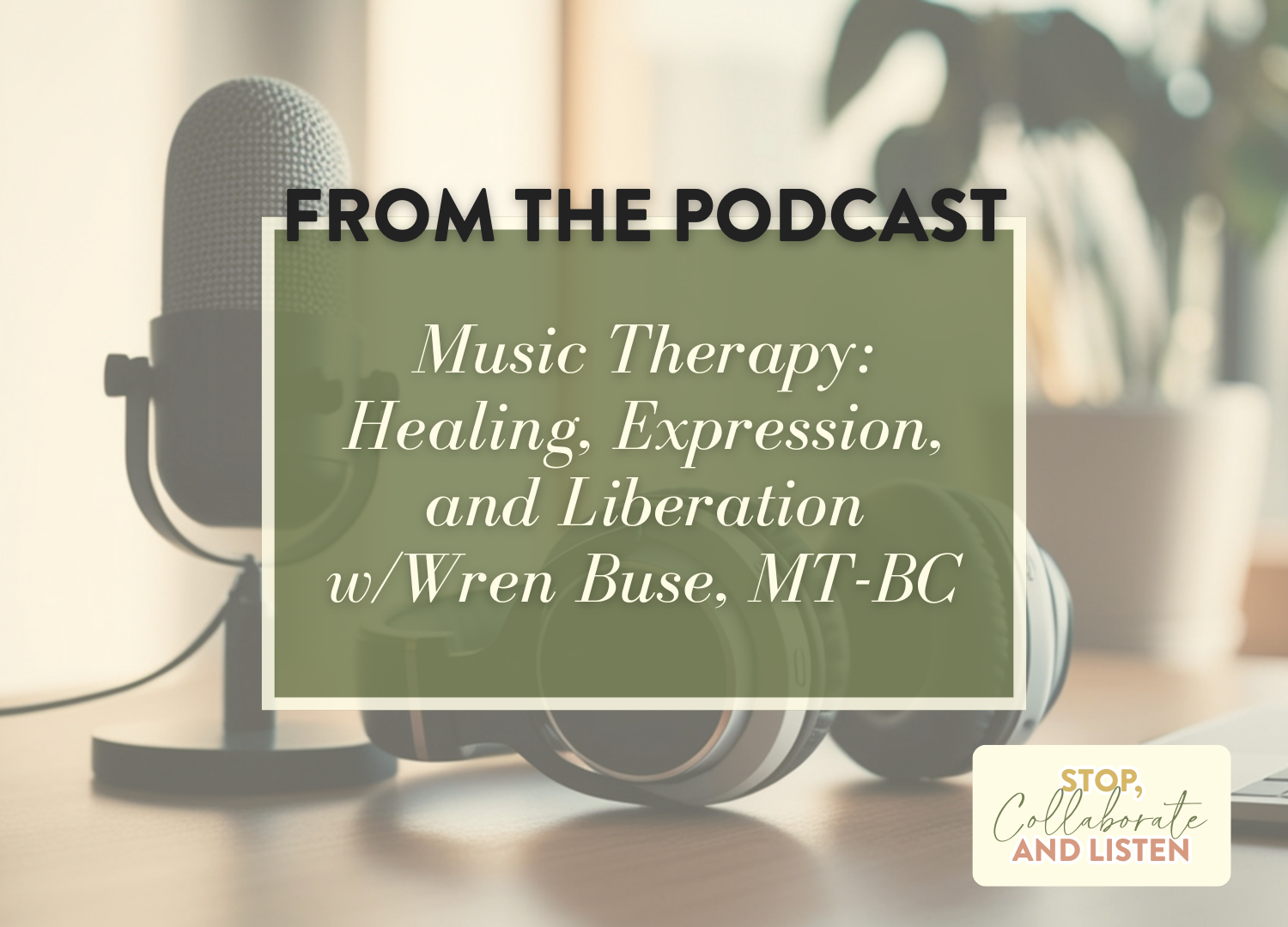
While Music Therapy is certainly fun, it’s also a powerful therapeutic modality that supports embodiment, expression, nervous system regulation, and identity, using music for non-musical goals. We sat down with CCN Board-Certified Music Therapist, Wren Buse, MT-BC, to talk all things Music Therapy. From what it actually is, common misconceptions, what sessions look like, and how it can support healing - especially body liberation - this is an episode you won’t want to miss. Plus, learn how you can be a part of Wren’s 12-Week Music Therapy and Body Image Support Group kicking off February 21!
Why This Conversation Matters
As Wren reminds us, music is inherently human. Throughout human history, music has been an integral part of connection, community, and expression. Music facilitates collective effervescence, or shared social electricity, that happens when people gather for a common purpose and shared emotional experience. Music can be used when words aren’t available or accessible, and it fosters emotional and nervous system regulation.
Music Therapy and Body Liberation Podcast Key Takeaways
Music Therapy is Not Just Listening to Music
Instead, Music therapy is a scientifically supported practice that promotes healing, embodiment, and systemic change. It intersects powerfully with social justice work, supporting body liberation and challenging systemic oppression.
Music Therapy Supports Non-Musical Goals
Goals could include feeling safe in one's body, managing anxiety, or exploring identity. It’s grounded in scientific principles like entrainment—aligning body rhythms with musical rhythms—and neurobiological responses to music, such as activation of the vagus nerve for calming.
Musical Skills are Not Required; Show Up as You
The goal isn't musical perfection—it's accessibility and choice. Clients are encouraged to select music they love, use instruments they feel comfortable with, and participate to the extent they feel able. This fosters empowerment and reinforces that healing isn't about fixing something that’s wrong but about affirming and supporting one's current experience.
Music Therapy x Fat Liberation
Music provides a safe space to process complex feelings about body image, trauma, and identity, especially when verbal expression feels difficult. It supports embodiment, helping individuals connect to their physical selves and challenge harmful messages.
Who This Episode Is For
People interested in learning more about Music Therapy
People interested in learning more about the intersection of Fat Liberation and Systemic Oppression
Anyone interested in joining Wren’s group
Wren’s Music Therapy and Body Image Support Group
This is a 12-week in-person group supporting individuals in larger bodies, using music activities like songwriting, lyric reflection, and creating music videos.
The aim is to validate individual experiences, explore systemic oppression, and foster community.
Participants often report that the group helps them see their bodies outside societal narratives, encouraging acceptance and self-empowerment.
Group starts February 21 and runs through May 9, 2026.
Moving Forward
We love learning about new modalities to foster healing and connection. If you are interested in working with Wren for individual therapy or want to be part of their group, please reach out today!